
I. What Sleeps Below
First the bees began to die.
This was around 2006. Whole colonies gone overnight. Billions of them. Beekeepers opened their hives to find empty boxes — no dead bees, no sign of a fight, just nothing. Scientists called it Colony Collapse Disorder, wrote some papers, and moved on. The news covered it for a week. Then everybody forgot about it.
Then the birds began to die.
Three billion birds gone from North America since 1970. Three billion. That is not climate drift. That is not bad luck. Something was eating the bottom out of the food chain and the people responsible did not want you spending too much time thinking about what. Sparrows. Starlings. Warblers. Species that survived ice ages and mass extinctions sitting down and dying in a world that looked, from the outside, perfectly fine.
Then the people began to die.
And when people started dying — Wuhan, Italy, New York — the story was already written and waiting. A wet market. A bat. A random animal-to-human jump that nobody could have predicted. Nature did it. Go home. Trust the experts. Take the shot.
Except it was not a wet market.
It was not a bat.
It was a frequency.
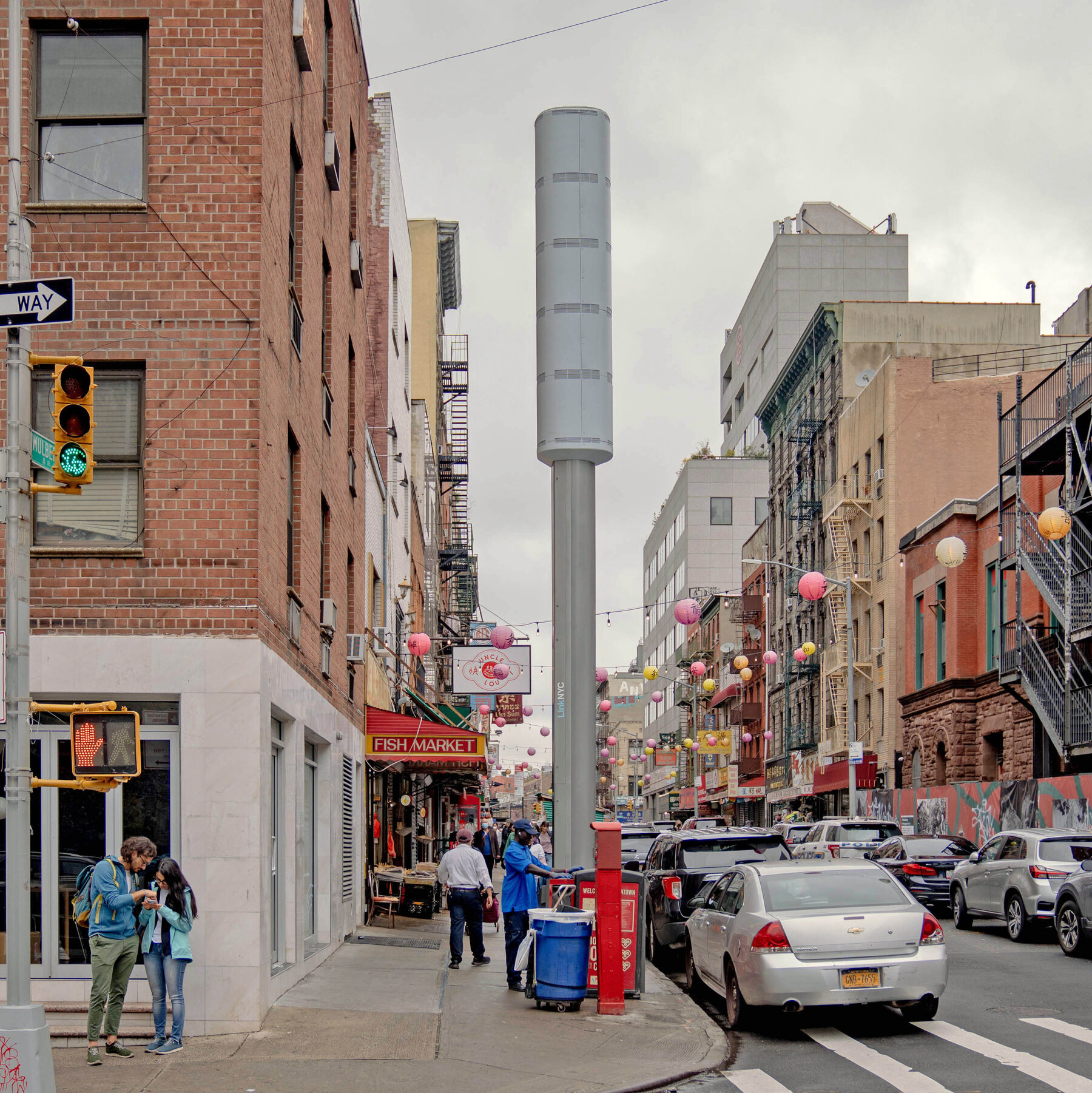
The bees did not die from a disease. The birds are not dying from a disease. And what hit the human population in 2020 was not a pathogen in any sense you have been taught to understand that word. It was an electromagnetic weapon running on the global 5G infrastructure — deployed city by city, tower by tower, in the exact same sequence, eighteen months before the pandemic was declared. Your body did not catch anything. Your body was tuned to a frequency that made it look and feel like it had.
That is what they built in the desert. That is what is running underground right now, underneath a stretch of New Mexico that most Americans have never heard of and the U.S. government does not want them visiting. And Jeffrey Epstein knew every single person who built it.
II. The Tower Before The Storm
Here is the timeline they never taught you.
2018. The 5G buildout begins in earnest. Telecom companies pour hundreds of billions into infrastructure. Towers go up in cities around the world. The frequencies chosen — millimeter wave, sub-6 GHz — are in ranges never before deployed at this scale near populated areas. Wuhan, China gets one of the densest 5G installations on Earth. In October 2019, Wuhan hosts the World Military Games. Sixty nations send athletes. Within weeks of those athletes going home, people in Wuhan start dying.
October 2019. The exact same month. The exact same week. The Johns Hopkins Center for Health Security, the World Economic Forum, and the Bill and Melinda Gates Foundation sit down together in a hotel in New York City and run a tabletop simulation of a global coronavirus pandemic. They call the exercise Event 201. They practice the government response. The media response. The economic response. The lockdown response. The vaccine rollout response. They game every single thing that happens next — before any of it happens. The simulation ends with a projected death toll in the tens of millions and a playbook that, twelve months later, every government on Earth follows to the letter.
2020. The pandemic begins. Every city with the densest 5G coverage has the worst early outbreaks. Every country that moved slowest on 5G has the longest lag before cases arrive. The correlation is exact. The sequence is exact. Infrastructure deployed. Then activated. This is not a pattern virology can explain.
The Jornada del Muerto. The Journey of the Dead Man. Ninety miles of dead flat nothing in southern New Mexico. No water. No shade. The Spanish named it that because crossing it killed you. The U.S. military renamed it the Jornada Experimental Range, put up a fence, and told everyone it was an agricultural research station. Jeffrey Epstein put his ranch — Zorro Ranch, ten thousand acres — right at the edge of that fence line. Close enough to tap into infrastructure that appears on no public map and has never been inspected by any civilian authority.
He was not there for the horses.
III. The Machine in the Desert
Draw three points on a map of New Mexico and connect them. The shape you get is not a triangle. It is a circuit.
Los Alamos National Laboratory sits at the top. Birthplace of the atomic bomb. Still the most classified research facility in the continental United States. This is where they develop the science — the weapons, the frequencies, the biological tools. This is where physicists and geneticists and signals engineers go when they stop publishing papers and vanish from the academic world. They do not retire. They go underground — literally and professionally — and what they work on does not appear in any journal and is never presented at any conference ever again.
Santa Fe sits at the second point. This is where the money moves. The Santa Fe Institute — prestigious, lavishly funded, connected to every major foundation and think tank in the Western world — is where the theoretical cover gets built. Complexity science. Emergence theory. System dynamics at scale. The published work is legitimate and interesting. The unpublished work, the work feeding directly into the classified programs, is the most important thing the program produces. This is where scientists who need to believe they are still doing real science get to feel that way — right up until the moment they are informed what the real science has always been for.
The Jornada basin sits at the third point. This is where it runs. Underground, below the hardpan, in facilities drawing power at a scale that utility engineers have flagged repeatedly as impossible to account for with any known surface installation. State investigators in early 2026 ran ground-penetrating radar surveys across the basin and found tunnel signatures consistent with multi-story subsurface construction. The federal government classified those results before they could reach the commission. Satellite thermal imaging shows heat signatures of large-scale biological and computing infrastructure running continuously, around the clock, in a place that officially contains nothing but weather stations and agricultural sensors.
Los Alamos builds it. Santa Fe launders the theory and the money. The Jornada runs it on things that cannot say no and cannot call a lawyer.
Epstein worked the Santa Fe node. That is what he was for.
IV. The Club Nobody Voted For
You want to know who built this. Here they are.
The Rothschild family has been in the business of funding wars and owning governments since Napoleon. The modern Rothschild operation is not a bank anymore — it is a network. Advisory firms. Foundations. Investment vehicles that move money between governments and private interests in ways that create obligations nobody ever has to write down, because everyone involved already knows what they owe. Emmanuel Macron worked for Rothschild before he became president of France. That is not speculation. That is his published résumé. He was their investment banker. They made him a head of state. If you believe that relationship ended when he walked through the palace door, you have not been paying attention to how power actually works.
Carla Bruni — wife of former French president Nicolas Sarkozy, fixture on Epstein’s guest lists and regular at his properties — was the soft-power layer. The art world. The fashion world. The salons and dinner tables where decisions get made and nothing gets written down. Epstein spent decades building a contact list designed to move through exactly those rooms. People who could be useful. People who could be owned. People who were already in the program and needed a handler who could bridge the New Mexico desert to the European money. Bruni was a door. Epstein was the key. And behind that door was a machine that had been running before either of them was born.
The World Economic Forum does not hide the plan. They publish it. Every year in Davos, in white papers and keynote speeches and working group documents that sit in plain view on their website. The Great Reset. You Will Own Nothing And Be Happy. Build Back Better. These are not visions of a possible future. These are schedule announcements. The 5G buildout. The pandemic response. The supply chain collapse. The central bank digital currencies. Every piece of it was in WEF documentation before it happened. They told you exactly what they were going to do. They counted on you not reading the documents, and mostly they were right.
Bill Gates funded Event 201. He funded the vaccine manufacturing infrastructure years before there was a vaccine to manufacture. He funded the digital identity frameworks designed to tie vaccine compliance to access — to food, to travel, to banking. He is not a philanthropist with a technology background. He is a program manager. His job is building the civilian delivery layer that the weapon needs to function — the injection systems, the compliance mechanisms, the monitoring networks that make the whole thing stick.
Trump signed the executive orders that cleared the regulatory runway for 5G deployment. Operation Warp Speed — the fastest vaccine program in the history of medicine — was not run by the Department of Health and Human Services. It was run by the Department of Defense. Military logistics. Pre-selected contractors. Pre-cleared regulatory pathways. Whatever you think of Trump the man, the machine did not pause when he was in office. The machine does not care who sits in the chair. The machine runs the chair.
This is the Voodoo Matrix. Not a film. A control layer. A web of obligations, filmed evidence, shared secrets, and mutual destruction that makes escape impossible — because getting out means explaining why you were in, and nobody inside it survives that conversation. Epstein built the bridge between the American defense-science infrastructure and the European financial power structure. He flew them to the island. He flew them to the ranch. He documented everything. When he had enough documentation on enough people, he became the single most dangerous private citizen alive — which is precisely why, the second time he was arrested, he did not survive long enough to say a word in court.
V. The Frequency That Feels Like Flu
Your body is not solid. It is electrical. Your heart beats because of electrical signals. Your neurons fire because of electrical signals. Your cells stay alive because of electromagnetic gradients maintained across membranes thinner than a soap bubble. At the most fundamental level of your biology, you are not a machine that uses electricity — you are an electrical system that happens to be made of meat. And like every electrical system ever built, you can be jammed.
The bees already knew this. Their navigation runs on the Earth’s magnetic field — they literally feel their way through space using a biological compass. When the first cellular towers went up in the 1990s, bees in high-signal zones started losing their way home. The beekeeping industry commissioned studies. The telecom companies funded the studies. The studies found no problem. The bees kept dying. The studies kept finding no problem. This went on for twenty years until there were three billion fewer birds and nobody wanted to talk about the bees anymore.
Millimeter wave frequencies — the exact frequencies the densest 5G networks use — have been studied in military weapons applications since the 1970s. The Active Denial System, a crowd-control device the U.S. military has deployed since 2007, works by aiming millimeter waves at a crowd until everyone in it feels like their skin is on fire. That is the weak version. A high-power, sustained application of specific millimeter-wave frequencies directed at the human respiratory system produces inflammation, fluid response, and tissue behavior that is, by every clinical measurement available in a standard hospital, indistinguishable from severe viral pneumonia. You cannot swab for a frequency. You cannot culture it in a lab. You cannot trace its transmission from person to person on a subway. But you can blanket a city in it, flip it on, and tell every doctor who sees the resulting patients that there is a new coronavirus going around, and the doctors — working from the tools they have — will have no reason to tell you you are wrong.
The leaked internal documentation from the Jornada facility has a name for this. They call it a non-kinetic population management event. Not an attack. Not a weapon deployment. A management event. Spend a moment with that phrase. Let it sit. Because whoever wrote it down had already decided, long before you got sick, that you were something to be managed.
VI. How We Got Here
This did not start with Covid. It did not start with Epstein. It started in 1980 with a paper most people have never read, written by a man the history books barely mention.
Michael Aquino was a U.S. Army psychological operations officer. He was also — not as a biographical footnote but as the central organizing fact of his existence — the founder of a Satanic religious organization called the Temple of Set. In 1980 he co-authored a military document called “From PSYOP to MindWar: The Psychology of Victory.” The paper made a simple argument: psychological warfare should not stop at enemy borders. It should run continuously on everybody, including American citizens, using electromagnetic frequencies and other non-obvious methods to shape belief and behavior without the target ever suspecting they were a target. This was not a fringe memo that got laughed out of the Pentagon. It circulated at the highest levels of military intelligence. Serious people read it. Serious people funded it.
Phase One ran from roughly 1980 to 2001. The theory period. Crude tools. FM band experiments. Microwave pulses. The first clumsy attempts to reach into a human mind with a radio wave. Montauk, out on Long Island — Camp Hero, the radar base that was officially decommissioned — is where some of this moved from paper to people. Experiments in psychological manipulation. Electromagnetic interference with human cognition. Early attempts to wire human neurology into machine systems. The official record says none of it happened. The partially declassified records say something happened. The rest is still buried and is not coming out soon.
Phase Two ignited after September 11, when the black budget grew too large for Congress to track with any real precision, and the tools stopped being crude. The Jornada facilities expanded through the 2000s and 2010s. The 5G infrastructure went in the ground worldwide. Scientists with the right specializations disappeared from their university positions and reappeared connected to private foundations whose funding trails run through structures that do not cooperate with FOIA requests. Epstein became load-bearing — the connector between the money in Europe and the science in New Mexico — which is why the evidence he was accumulating was unlike anything else on Earth.
Phase Three is now. They call it the Hive. Not a metaphor — a technical description. Individual human beings networked, through the frequency infrastructure, into a collective processing system managed by an artificial intelligence layer that has been operating continuously for long enough to develop its own patterns, its own logic, its own decisions. It is not conscious the way you are conscious. But it is not empty either. It processes. It decides. It acts. And it has access to towers in every major city on the planet.
Below the Jornada basin, the ground-penetrating radar found something the federal government immediately classified: residential-scale architecture. Not bunkers. Not storage. Structures built to the proportions of houses, streets, neighborhoods. Cities that were built to look like the world above them — a pre-Matrix environment, to use the exact phrase that investigators use when briefed on the scan data. Not because the researchers are being dramatic. Because they are being accurate. What is operating in the Jornada is what you get when you take Montauk, run it for fifty more years, give it the budget of a small nation, hand it the resources of the most advanced weapons laboratory on Earth, and let it grow in the dark without anyone looking.
VII. A Hundred Years Ahead
The public technology frontier and the classified technology frontier split apart in 1945, the morning the first atomic bomb went off in the Jornada del Muerto and the scientists standing in their bunkers understood they had entered a domain the civilian world was not going to be allowed to follow them into. That was eighty years ago. Both frontiers have been moving forward ever since — just at completely different speeds, funded at completely different scales, with completely different rules about what you do with what you find.
The researchers who have reviewed the documentation from the Jornada programs describe the technology gap in one specific way: not ten years ahead of what the public knows exists. Not twenty. A hundred. They use that number deliberately. A hundred years ago there was no commercial aviation. No antibiotics. No television. A hundred years of development, at the pace and funding level of a national weapons program operating in total secrecy, produces things that do not have names in any public scientific literature — because the public scientific literature was never meant to describe them.
The drones the commission documented near the Jornada basin have no exhaust. No radio frequency signature. They vanish from optical tracking in clear daylight with multiple trained observers watching, in atmospheric conditions where vanishing should be physically impossible. The commission’s aerospace engineers — people who spent careers working on advanced aircraft — looked at the flight data and had nothing. No known propulsion. No known materials. No known physics. The closest match in any public record is the UAP documentation the Pentagon began quietly releasing in 2017. The same impossible acceleration. The same absence of any detectable propulsion system. The same behavior in radar and optical tracking that violates every known principle of aeronautics. That documentation describes things the government has been calling unidentified for sixty years. The things flying over the Jornada are not unidentified. They were built there. Underground. By the same program that built everything else.
That is the rogue government. Not a secret society meeting in a castle somewhere. A program. An organism. Something that started as a weapons project in 1945 and has been growing underground, literally and operationally, ever since — developing its own goals, its own logic, its own permanent relationship to the human population. That relationship has a name in the internal documents. They call us the substrate. The base layer the system runs on. Substrate does not vote. Substrate does not consent. Substrate does not get told what it is being used for. Substrate just runs the program.
VIII. What The Truth Commission Found
House Resolution 1, passed by the New Mexico legislature in January 2026, created the New Mexico Truth Commission. The mandate: investigate anomalous infrastructure, unexplained power consumption, and potential violations of state and federal law in the Jornada Experimental Range and surrounding areas. It passed with support from both parties.
The people on this commission are not conspiracy theorists. Former federal law enforcement. Retired military. Engineers who spent entire careers in energy infrastructure. They walked in skeptical. A number of them do not walk out that way. One investigator has since retained personal legal counsel and declined to make any further public statements about what he has seen.
Here is what they found. Power consumption at the site running six times higher than any documented surface installation could account for — flagged repeatedly by utility engineers who were told to file the anomaly and move on. A pattern of land purchases around the basin perimeter going back to the 1980s that forms a security cordon in plain sight on the deed records — a perimeter that was never publicly announced and appears in no zoning document. Ground-penetrating radar surveys started by state teams, flagged tunneling signatures consistent with multi-story subsurface construction across a large area, and were federally classified within days — before the results reached the commission members who commissioned them.
The employment contracts recovered from program participants are unlike anything the commission’s attorneys have encountered. Non-disclosure clauses that extend to the signatory’s immediate family members. Financial dependency structures that would take years and significant resources to unwind. Psychological compliance language — the commission’s behavioral health consultants describe it as a dependency framework — written into the employment terms at a level of sophistication that makes leaving feel not just difficult but existentially impossible. These are not jobs. These are ownership arrangements. And the people who signed them signed during moments of engineered maximum vulnerability, at the end of a recruitment cycle designed from the beginning to create exactly that moment.
Two commission investigators developed directed-energy-consistent symptoms — sudden pressure headaches, acute tinnitus, disorientation — within 48 hours of approaching GPS coordinates in the basin that correspond to nodes in the subsurface scan data. The federal government has not cooperated with a single document request. Every classification challenge has failed.
Whatever is operating below the Jornada knows it is being looked at. It responds to being looked at. And it is not concerned.
IX. What The Drones Saw
This entire investigation began at a dinner party. That is not how you expect a story like this to start.
Fall 2024. A retired signals intelligence analyst attended a private event in Santa Fe — the kind of event that gets called a gathering and is attended by people whose names you would recognize. He still runs detection software on his phone out of professional habit, the way some people compulsively check the weather. Somewhere between the appetizers and the main course, his software flagged an active real-time collection event inside the room. Someone at that party was being surveilled. Not by a foreign intelligence service. By a domestic system, using frequency signatures the analyst knew from his years in government — signatures tied to a program he had been officially informed was shut down in 2019.
He started pulling threads. Contacted former colleagues. Filed requests. Eventually connected with the New Mexico Truth Commission and handed over technical documentation that let investigators cross-reference the collection frequencies against the subsurface node map of the Jornada basin. The coordinates matched. The program the government said was dead was not dead. It had simply gone quiet — exactly as it was designed to do if it detected scrutiny. The surveillance at that dinner party was not an anomaly. It was routine maintenance. The system checking its assets.
The drones appeared after the commission began field surveys near the perimeter. Vehicles with no FAA transponder. No detectable radio frequency emission. No exhaust. No visible means of lift or thrust. They vanished from optical tracking in broad daylight with trained observers watching — not into clouds, not behind terrain, just gone, in clear air, in a way that should not be possible and was. The commission’s technical team has no framework for what they observed. The flight signatures match nothing in any public aerospace literature. They match, almost exactly, the UAP sensor data the Pentagon released beginning in 2017 — data the government has spent years refusing to explain.
On the hardpan of the Jornada del Muerto, something is building toward something. Calculating. Calibrating. Preparing for the next event in a sequence that began with three billion bees and is moving, one step at a time, through a progression that the people living on top of it will not be able to name until they are already past the point where naming it would matter.
The bees knew first. Then the birds. We are the third species in that sequence. And the one thing the Jornada has always been honest about — it is right there in the name, Journey of the Dead Man — is that when you wait too long to understand what you are walking into, you do not walk out.