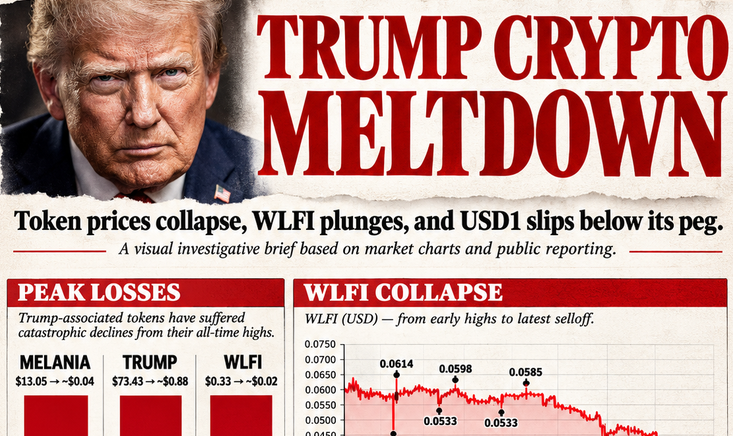
As Trump-branded cryptocurrencies collapse and a dollar-backed stablecoin shows signs of distress, an expanding network of related-party transactions, political endorsements and preferential insider deals raises questions that reach far beyond the financial scandal of Bernie Madoff.
Bernard Madoff had Wall Street. Donald Trump has the White House.
Nearly two decades after the collapse of the most notorious Ponzi scheme in American financial history, a new financial controversy is unfolding at the intersection of cryptocurrency, political power, international finance and presidential publicity.
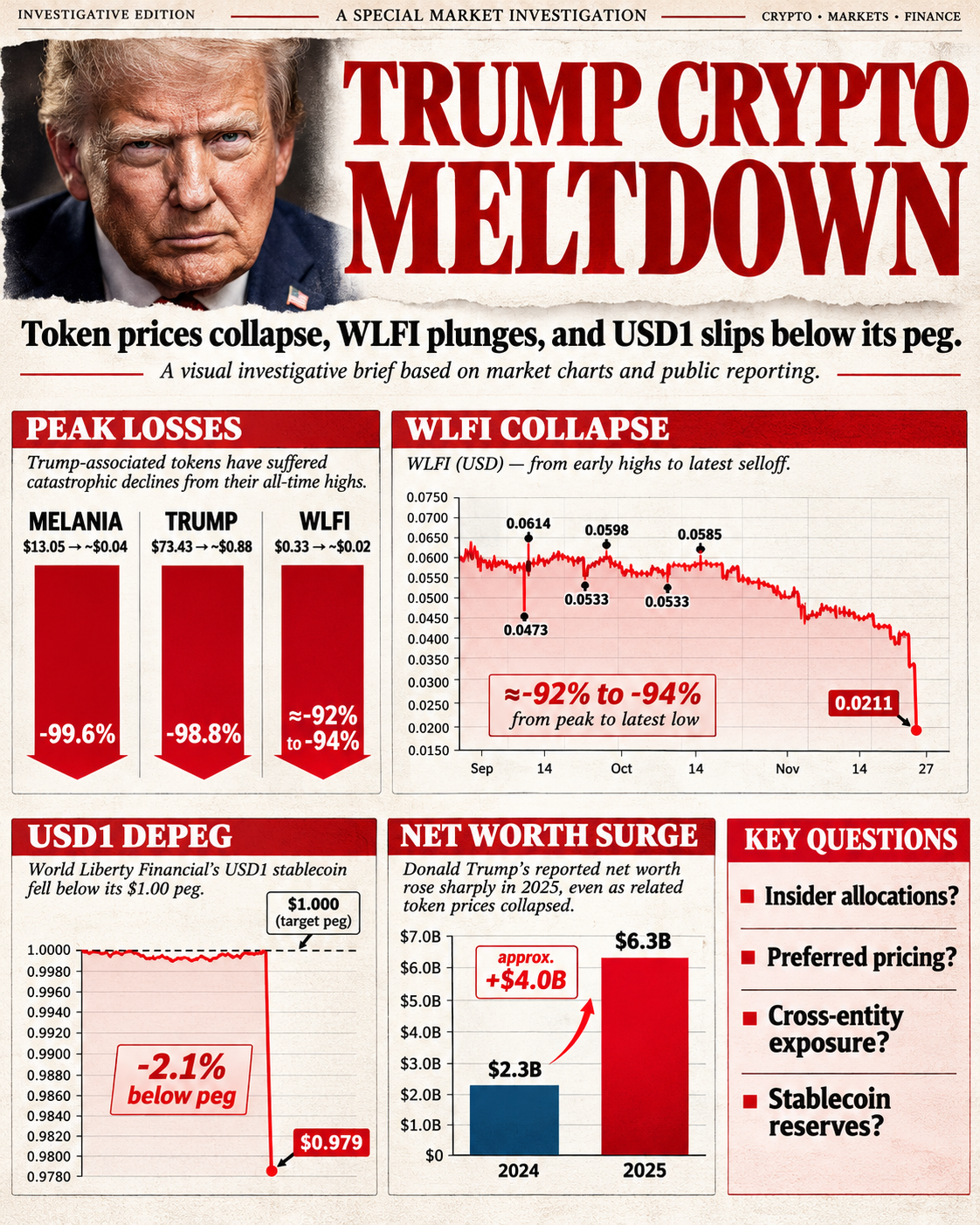
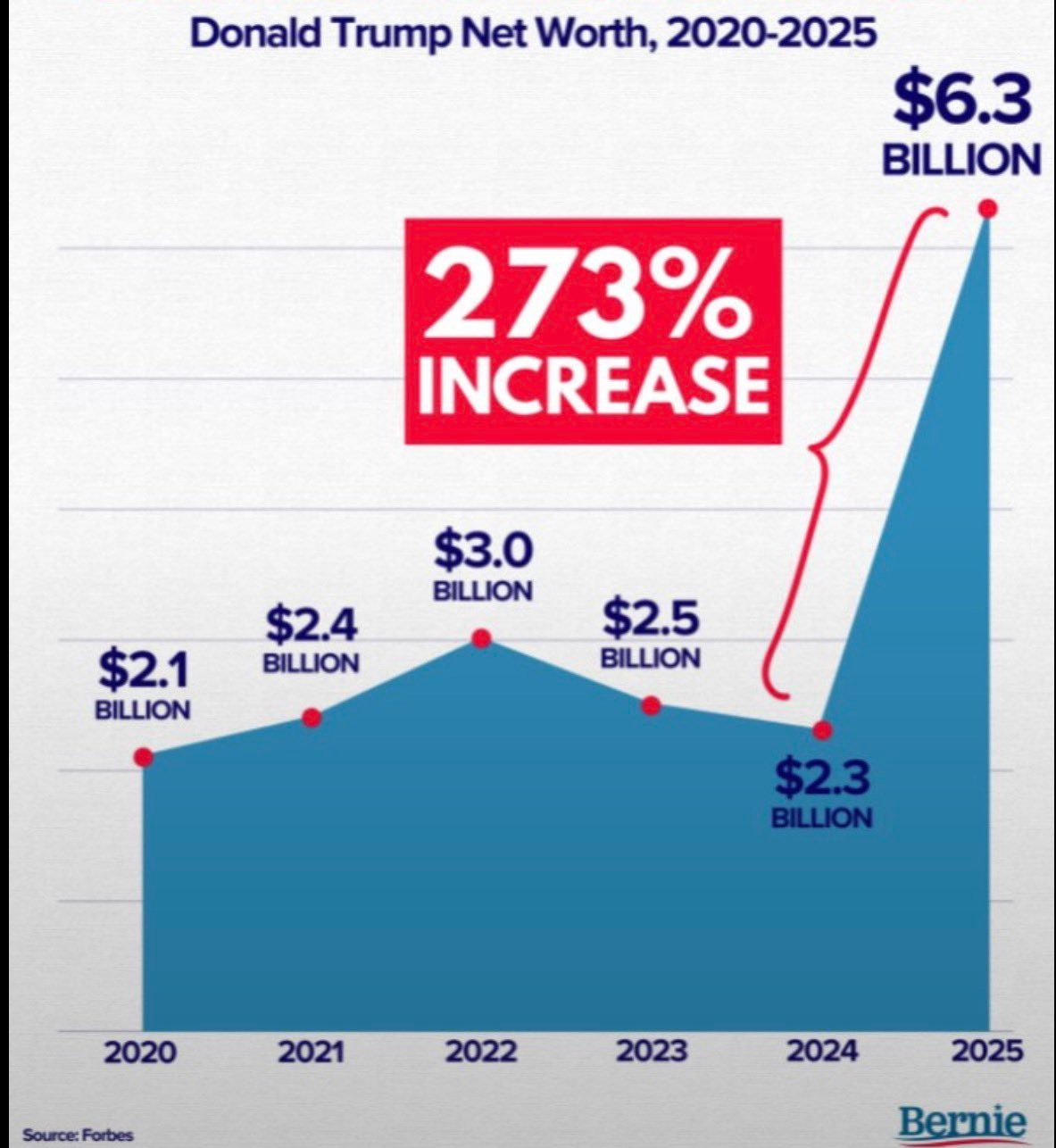
Across five major Trump-associated cryptocurrency and cryptocurrency-linked ventures, outside investors have suffered losses exceeding $5 billion, according to a November 22 Reuters investigation. Meanwhile, the president’s family has accumulated billions in cryptocurrency earnings.Reuters +2
The emerging financial picture raises a question that federal investigators may eventually have to answer: were these enterprises genuinely designed to create sustainable value for investors, or were their financial structures primarily designed to extract wealth from those arriving after the founding participants?
An empire of collapsing assets
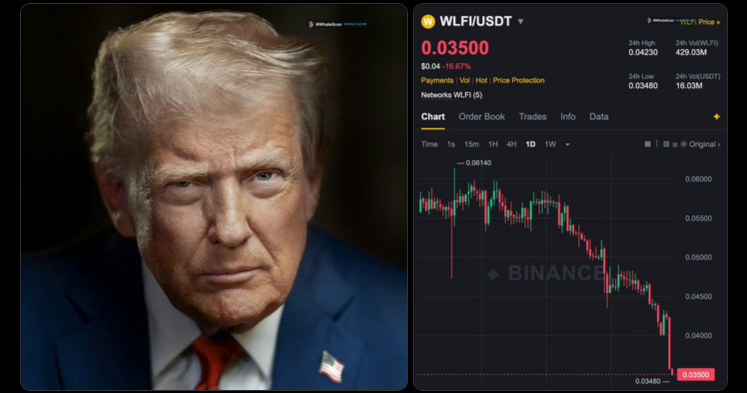
Market screenshots dated November 28 present a remarkable picture of destruction across the presidential cryptocurrency brand.
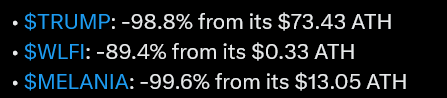
A $10,000 investment at MELANIA’s displayed historical peak would now be worth approximately $40. An equivalent investment in the presidential meme coin would be worth approximately $120.
$10,000
$120
$40
Yet even as the financial value of these products evaporated, the commercial machinery surrounding them continued to operate.
On November 22, Trump hosted another gala for major holders of his meme coin. His financial disclosure attributed at least $635 million in earnings to that product.Reuters
The contrast between investor losses and promoter earnings is at the center of the controversy.
The privileged investors
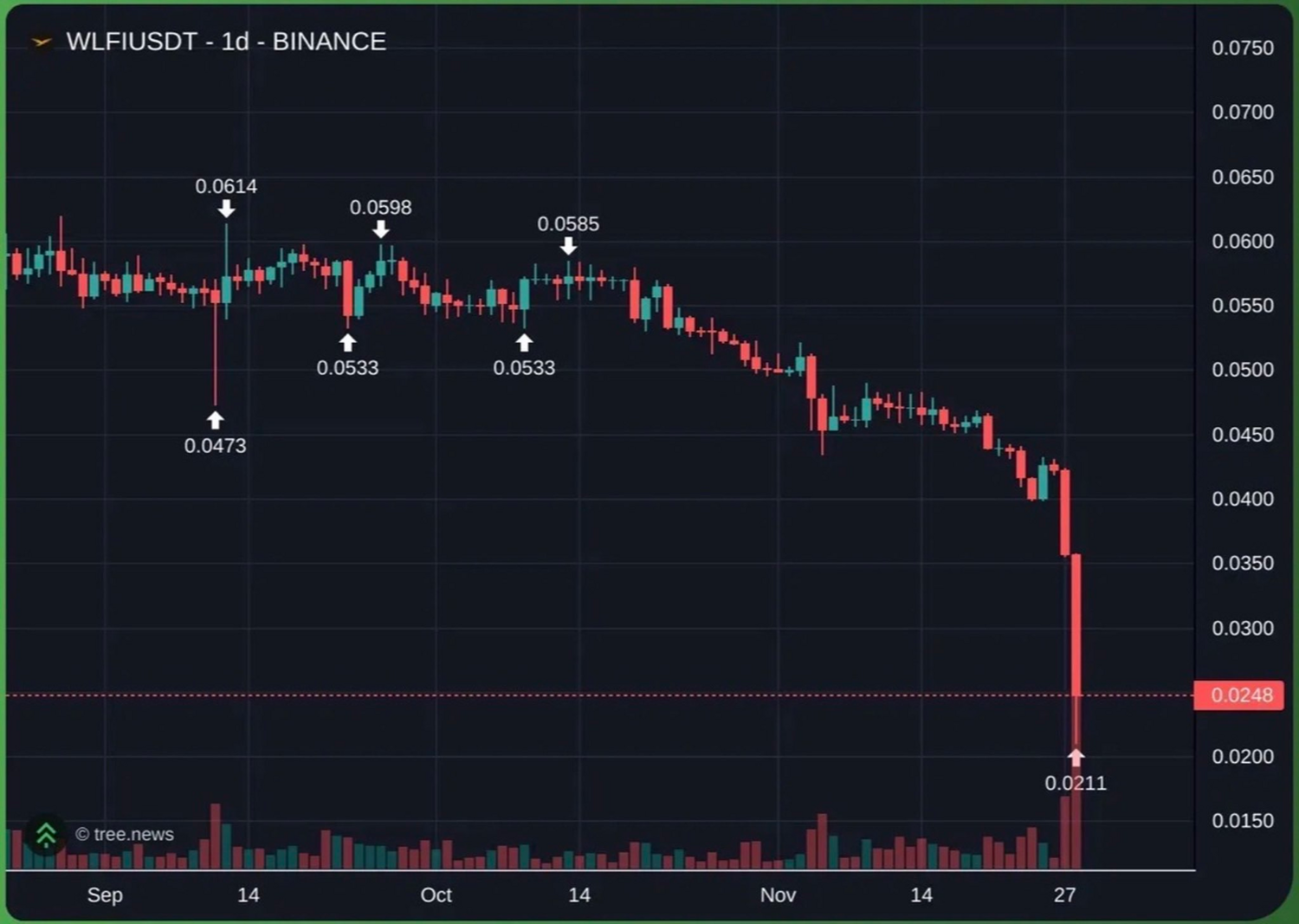
At World Liberty Financial, the financial experience of an investor depended dramatically on when that investor was permitted to enter.
The earliest purchasers obtained tokens for as little as 1.5 cents. A subsequent offering priced tokens at five cents. Later public buyers entered at substantially higher prices.
20×
6×
1×
Such preferential pricing is not inherently illegal. But combined with political publicity, restricted token transfers and concentrated insider revenue, it raises questions about who was ultimately positioned to profit.
World Liberty’s disclosed financial arrangements entitled a Trump-associated entity to 75 percent of net token-sale revenue. Unlike ordinary token purchasers, the beneficiaries of that arrangement could generate income from the sale itself, irrespective of subsequent market performance.Investing.com
When the customers lose, the promoters can still win
$2.3B+
$5B+
The essential financial asymmetry is that the promoters and purchasers did not necessarily share the same economic risks.
The public purchased assets whose value depended on future demand. Founders and affiliated entities could collect revenue immediately through token distributions, sales and commercial arrangements.
A forensic investigation would need to establish whether promotional campaigns were synchronized with insider transactions, whether privileged investors received exceptional liquidation rights, and whether purchasers understood the extent to which their money benefited the founding entities.
The American Bitcoin connection
The financial relationships extend beyond cryptocurrency tokens.
Hut 8, the corporate partner behind American Bitcoin, purchased $25 million in World Liberty Financial tokens. Reuters calculated that approximately $19 million of that transaction flowed to the Trump family.Reuters
American Bitcoin’s exposure to declining Bitcoin prices and Hut 8’s exposure to World Liberty Financial create overlapping financial risks.
The crucial question is whether the interconnected businesses merely share commercial interests or whether capital raised in one enterprise is being used to sustain financial obligations elsewhere.
The latter would require close examination of private contracts, corporate treasury accounts and blockchain transactions.
The dollar that stopped being a dollar
Perhaps the most consequential warning appeared not in the speculative cryptocurrencies but in World Liberty Financial’s USD1 stablecoin.
A November 28 market screenshot shows USD1 trading at approximately $0.979.
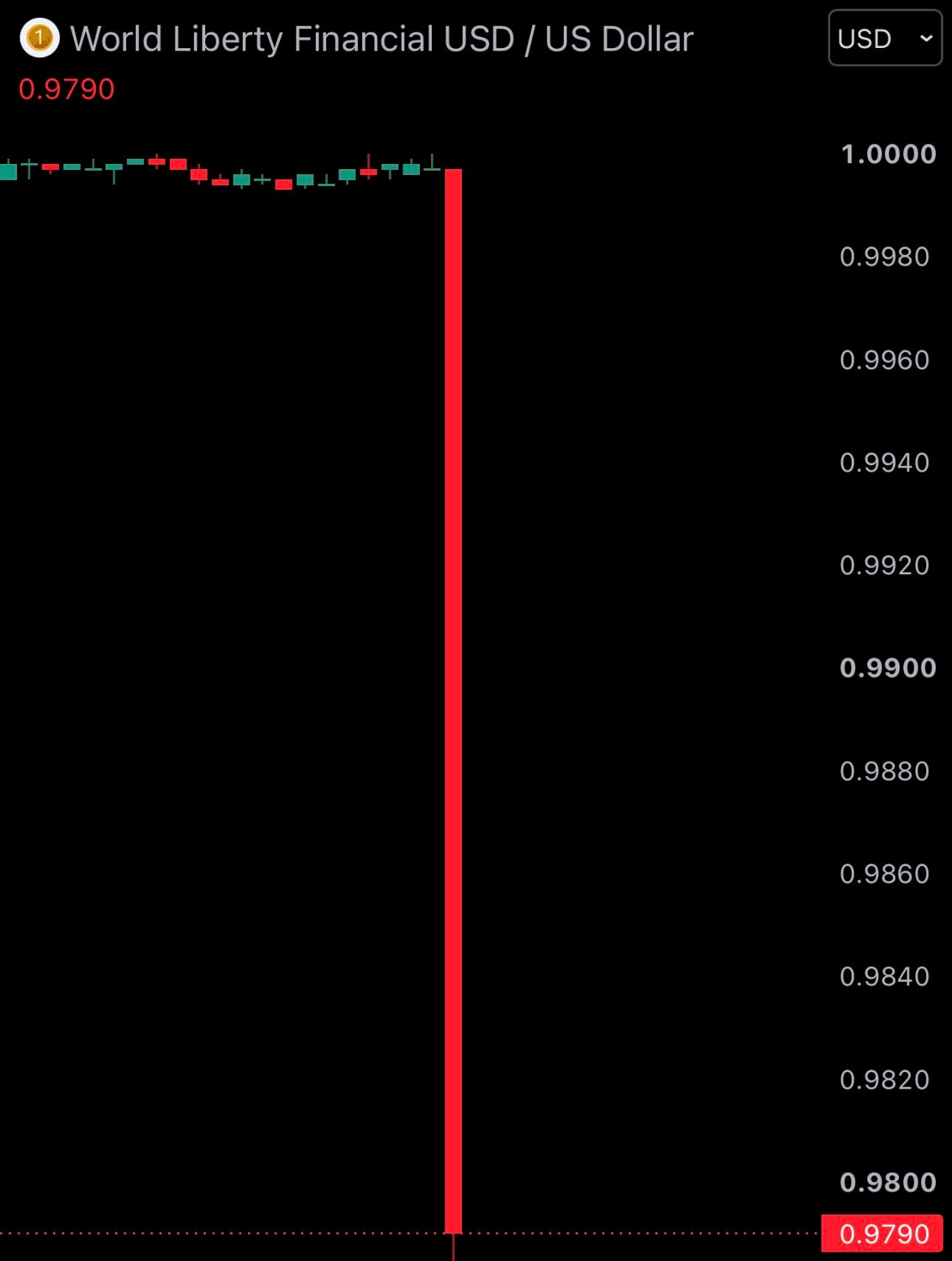
Unlike a meme coin, a dollar-backed stablecoin is designed to maintain parity with the United States dollar.
A persistent depeg would raise concerns about liquidity, redemption capacity and the accessibility of reserve assets.
The potential consequences become considerably more serious if those reserves have been pledged, encumbered or diverted to support affiliated enterprises. No such diversion has yet been established.
Independent reserve verification may therefore become one of the most important safeguards against a wider financial crisis.
A lawsuit filed by major WLFI investor Justin Sun specifically raises questions about whether newly minted USD1 tokens were being used to service existing financial obligations without corresponding reserve backing.
That is considerably more relevant to our investigation than the falling cryptocurrency prices alone.coindesk.com +2
1. The Dolomite circular lending arrangement
On April 9, 2026, CoinDesk reported that World Liberty Financial had pledged 5 billion of its own WLFI tokens on Dolomite to borrow approximately $75 million in stablecoins.
The transaction reportedly drained available liquidity from Dolomite’s USD1 lending pool, while more than $40 million was transferred to Coinbase Prime.
Dolomite was co-founded by an adviser to World Liberty Financial.coindesk.com +1
This establishes a mechanism through which World Liberty Financial could monetize its own speculative tokens using stablecoin liquidity supplied to a third-party lending platform.
The television endorsement machine
Madoff built credibility through decades of cultivated relationships, prestigious professional positions and referrals from wealthy clients.
The modern cryptocurrency marketplace operates differently. Television interviews, presidential announcements, social media campaigns, exclusive dinners and celebrity endorsements can reach millions of potential purchasers almost instantaneously.
An investigative examination would compare every significant promotional appearance against contemporaneous blockchain transactions.
Who was buying before the announcement?
Who was selling afterward?
Which participants received compensation?
Were financial interests adequately disclosed?
Did the individuals promoting these assets possess information unavailable to the purchasing public?
The answers could determine whether the publicity represented legitimate commercial promotion or something materially more troubling.
From cryptocurrency to government-backed investment accounts
Beyond the cryptocurrency businesses lies an entirely different financial enterprise: the Dell-backed Trump Accounts program.
Michael and Susan Dell’s $6.25 billion philanthropic commitment helped establish an investment initiative of enormous national scope.
Unlike cryptocurrency tokens, these accounts are intended to hold regulated investment assets for children. Their financial structure must therefore be examined separately.
Nevertheless, the combination of presidential branding, government administration, private philanthropy and large financial institutions raises legitimate questions about procurement, investment management fees and political conflicts of interest.
Investigators would need to establish whether any financial benefit was granted to participating corporations in exchange for their support of presidential initiatives.
There is currently no established evidence that children’s investment accounts are financing the cryptocurrency enterprises.
The Madoff comparison
| Dimension | Bernie Madoff | Trump-associated financial ventures |
|---|---|---|
| Public credibility | Wall Street reputation | Presidential brand and political visibility |
| Financial distribution | Private investment networks | Global cryptocurrency exchanges and public markets |
| Promotion | Referrals and reputation | Social media, television and presidential events |
| International participation | Global investors | Global investors and foreign government-linked entities |
| Government authority | No presidential authority | Commercial interests associated with a sitting president |
| Reported losses | Approximately $65 billion in fictitious account balances | More than $5 billion in reported outside investor losses across five ventures |
| Legal status | Proven Ponzi scheme; criminal convictions | Financial controversies and potential investigative avenues |
Madoff’s fraud was ultimately established through evidence that he fabricated investment activity and paid existing customers with money obtained from subsequent investors.
No equivalent unified mechanism has yet been proven across the Trump-associated enterprises.
The dimension that makes the present controversy institutionally different is the involvement of presidential authority. A financial investigation must consider not only investor protection but also whether private financial relationships influenced public decisions.
Following the money
The records necessary to resolve these questions are identifiable:
- Complete beneficial ownership registers.
- Insider wallet addresses and transaction histories.
- Preferential token-sale and unlocking agreements.
- Television endorsement and compensation contracts.
- Related-party loans and corporate treasury transfers.
- Independently verified stablecoin reserve statements.
- Communications surrounding government decisions affecting financial beneficiaries.
If those records reveal that incoming capital was systematically used to satisfy earlier investors, conceal losses or sustain fabricated valuations, prosecutors could examine a Ponzi mechanism.
If they instead reveal coordinated misleading promotion followed by insider liquidation, the relevant investigation could concern market manipulation or fraud.
World Liberty Financial has disputed outside methodologies for measuring aggregate investor positions and token valuations.Reuters
The ultimate test of accountability
The collapse of a speculative asset does not, by itself, constitute financial fraud. Nor does earning money from a risky enterprise automatically establish criminal conduct.
But when billions in investor losses coincide with billions in family earnings, preferential financial arrangements, political endorsements and international commercial relationships, financial transparency becomes indispensable.
The lesson of the Madoff scandal was that prestige must never substitute for independent verification.
That principle applies with equal force when the prestige attached to a financial product comes from the highest office in the United States.
Sources and investigative references
- Reuters — Parsing the Trumps’ crypto profits and investors’ losses
- Reuters — Trump hosts gala as his meme coin plunges to record lows
- House Oversight Democratic staff — Cryptocurrency financial report
- CoinDesk — Trump’s World Liberty Financial uses 5 billion WLFI to borrow $75 million from a platform its adviser co-founded (April 9, 2026)
- Al Jazeera — Blockchain billionaire Sun takes Trump family’s crypto firm to court (April 22, 2026)
- FBI — Bernie Madoff investigation (United States v. Bernard L. Madoff and related cases)
- Five supplied market and financial screenshots, November 28, 2026.